FREE Download: Reading School 2026 11+ Exam & Year 7 Entry 11 Plus Guide

Expert Reviewed

Expert Reviewed

22nd July 2026
6 mins read
Share
WhatsApp
11 Plus (11+) Comprehension Test Papers Image
11+ English Papers with Detailed Answers Image
11+ Maths Solved Past Papers Image
11+ Maths Solved Topic Wise Questions - 2026 Image

Reading School Introduction

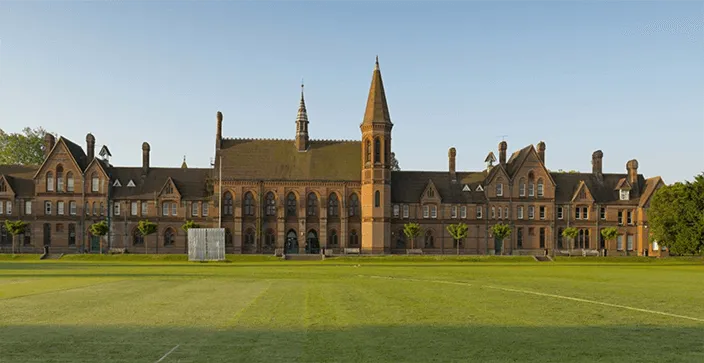
​​Reading School, a prestigious boys' grammar school in Reading, Berkshire, boasts a rich history, founded in 1125. It consistently ranks among the best grammar schools in UK. This selective institution offers a world-leading education to young men.

Gaining entry for 2026 admissions requires careful preparation for the competitive 11+ Exam. With over 1000 pupils, this institution is highly sought after. Understanding its Entrance Exam process is crucial for prospective parents. The school's Ofsted rating reflects its commitment to excellence.

Reading School, founded in 1125, offers a unique educational journey rooted in 900 years of history. Fostering a strong community, Year 7 students participate in the annual Festival of Belonging, including a camp out. Its distinctive FSCE entrance exam further highlights its bespoke approach.

The Reading School Ofsted Report also rates the school as an Outstanding School in all their criterias.

In this guide, I apply 6+ years of education consultancy to help parents navigate Reading School 2026 11 plus (11+) Exam admissions with confidence.

Comma

Our focus will always be character. Our mission will always be social impact

- Dr Chris Evans, Headmaster

Key Details

School Details

  • Type of School: Boys' Grammar School
  • Boarding Type: Weekly Boarding
  • Gender Type: Boys
  • Religion: Does not apply
  • Age Range: 11-18
  • Number of Pupils (Total): 1100+
  • GCSE Results (2025): 89% of students secured grades 7–9
  • A-Level Results (2025): 89% of all students secure A*, A, or B grades


Year 7 Admissions Details

  • Year 7 Admissions Policy: Selective
  • Number of Places in Year 7 (PAN): 150
  • Exam Board: Future Stories Community Enterprise (FSCE)
  • Number of Stages: 1
  • School Catchment Area: Yes
  • Sibling Policy: No
  • Pass Mark: Aim for 90%

This information has been sourced from Get Information About Schools and Reading School Official Website.

Key Dates for (11+) 11 plus Exam - Reading School

Navigating the admissions process for Reading School can be complex, especially when keeping track of crucial deadlines. To assist prospective parents and pupils, I have compiled the most important Reading School 11 plus exam dates for 2027 entry.

This includes the Reading School open day, the main 11+ Exam date, and other key 11 plus exam dates to ensure you are well-prepared for each stage.

Date

Event

Wednesday, 25th March 2026

Reading School open day and test registration opens

Sunday, 17th May 2026

Test registration closes

Sunday, 12th July 2026

Sporting Aptitude Assessment

Wednesday, 15th July 2026

Test date for SEN applicants

Thursday, 16th July 2026

Testing date for Day and Boarding applicants

Friday, 25th September 2026

Test date for Day applicants living outside the catchment area

Mid-October 2026

Results available online

Saturday, 31st October 2026

Deadline to apply for secondary school places

Monday, 1st March 2027

Secondary school national offers day

Summary Icon

Our Practical Tip for Parents

Always verify these dates directly with Reading School's official admissions page. Early preparation and timely submission of all required forms are crucial for a smooth application process.

Reading School Application Process for 11+ Exam Entry

Reading School, one of the most respected grammar schools in Berkshire, offers an exceptional educational journey for boys. Entry into Year 7 is highly competitive and determined by performance in the 11+ Exam.

Parents considering this prestigious institution should familiarise themselves with the detailed application process available on the school's official website.

The 11 plus exam process involves several key stages:

  • Initial Registration: To begin, parents must understand how to register for 11+ exam. This crucial step typically opens in March and closes in May. All 11 plus exam registration is completed directly via the Reading School website. If you are applying for a boarding place, you must complete the separate Boarding Supplementary Information Form at this stage.
  • The 11+ Exam: The 11+ Exam itself is usually held in July. It assesses a broad range of Key Stage 2 subjects, including English & Mathematics often incorporating both multiple-choice and written-response questions. Specific details on the exam format and content are published in the Reading School Admissions Policy.
  • Results and Application: Results are typically released in mid-October. If your child achieves the qualifying standard, you must then name Reading School as a preference on your local authority's Common Application Form by the end of October. Passing the eleven plus exams does not guarantee a place, as the school is often oversubscribed.
Summary Icon

Our Practical Tip for Parents

Regularly check the Reading School website for the most up-to-date admissions timeline and policy documents.

Reading School Catchment Area

The School catchment area is a key factor for day place applicants to Reading School, a selective boys' grammar school. Its admissions policy details specific geographical criteria for entry.

For families preparing for the competitive 11 plus test, understanding the `Reading School Catchment Area` is vital. Residency provides priority in the oversubscription criteria for the 11+ exam catchment, after candidates achieve the required academic standard.

The `Reading School Catchment Area` includes many postcodes across Berkshire and surrounding areas. Examples include:

  • RG1, RG2, RG4, RG5, RG6, RG7, RG8, RG10, RG12, RG18, RG19, RG30, RG31, RG40, RG41, RG42, RG45.
  • Specific parts of RG9, RG14, RG20, RG26, RG27.
  • Selected GU, OX, and SL postcodes.

Always consult Reading School's official admissions policy for precise details on catchment boundaries and their impact on your application.

Which are Best Alternatives to Reading School?

Reading School is a highly sought-after boys' grammar school in Berkshire. It offers an exceptional education, attracting many bright pupils.

However, competition for places at Reading School is incredibly fierce. With over 750 applicants for approximately 150 Year 7 places, securing a spot is challenging. This means roughly five boys compete for every single place available.

As an experienced UK Education Consultant, I always advise parents to have a robust strategy. Focusing solely on one school can lead to disappointment.

A balanced approach ensures your son has excellent options. Consider a portfolio of alternative schools to mitigate this intense competition.

Here are some key considerations for parents:

  • Understand the Reading School Exam: The school uses its own Future Stories Community Enterprise (FSCE) 11+ exam. This unique test covers a broad range of KS2 subjects.
  • Broaden Your Search: Look at other high-performing grammar schools in the region. Also, consider academically strong independent schools.
  • Geographic Proximity: Factor in travel time for daily commutes. A long journey can impact your child's well-being and study time.
  • Admissions Criteria: Each school has specific oversubscription criteria. Familiarise yourself with these for all target schools.
  • Exam Board Differences: Be aware that other grammar schools may use GL Assessment or CEM. Preparation needs to be tailored accordingly.

A strategic approach involves applying to a mix of schools. I recommend aiming for three strong grammar school options.

Additionally, include two high-achieving independent schools. This comprehensive plan significantly increases your son's chances of attending an elite institution. It provides peace of mind during the demanding 11+ process.


Top 5 Alternative Grammar and Independent Schools

Reading School sets a high standard for boys' education. It is often considered a "Gold Standard" grammar school. However, the extreme competition means a well-thought-out strategy is essential.

I always recommend a 3-school grammar strategy and a 2-school private strategy. This approach helps mitigate the pressure. It ensures your son has multiple pathways to an excellent education.

Row Detail

Herschel Grammar School

Langley Grammar School

Dr Challoner's Grammar School

Abingdon School

Magdalen College School

School Type

State Grammar

State Grammar

State Grammar

Independent (Private)

Independent (Private)

Establishment Year

1952

1956

1624

1256

1480

Gender

Co-Ed

Co-Ed

Boys

Boys

Boys

Oversubscription Criteria

Score/Distance

Score/Distance

Score/Distance

Academic Merit

Academic Merit

Exam Board

GL Assessment

GL Assessment

GL Assessment

School's Own

School's Own

Stage 1 Subjects & Format

English, Maths, VR, NVR (MCQ)

English, Maths, VR, NVR (MCQ)

Verbal, Numerical, NVR (MCQ)

English, Maths, VR (MCQ/Open)

English, Maths (Open)

Stage 2 Subjects & Format

N/A (Single Stage)

N/A (Single Stage)

N/A (Single Stage)

Interview, Group Task

Interview

GCSE Results (% 9-7) in 2025

~88%

~89%

~92%

~87%

~97%

A-Level Results (% A*-B) in 2025

~82%

~83%

~88%

~92%

~95%

Oxbridge Admissions (Recent annual average)

~8-12

~8-12

~15-20

~25-30

~35-40

Why these schools are top alternatives to Reading School:

  • Herschel Grammar School and Langley Grammar School: These co-educational grammar schools in Slough are excellent academic choices. They use the GL Assessment exam, which is a common format. Their strong academic results make them highly desirable.
  • Dr Challoner's Grammar School: Located in Amersham, this boys' grammar school is consistently top-ranked. It uses the GL Assessment exam, requiring different preparation. It offers a rigorous academic environment.
  • Abingdon School: This independent boys' school in Oxfordshire provides an outstanding education. It is known for its academic excellence and extensive co-curricular programme. The entrance process is bespoke.
  • Magdalen College School: Situated in Oxford, this independent boys' school is one of the UK's highest-achieving. It offers an intellectually stimulating environment. Entry is highly competitive.

Remember, Reading School receives a significant number of applications. For example, over 750 boys typically apply for just 150 places. This makes a multi-school application strategy crucial for success.

Summary Icon

Our Practical Tip for Parents

Given Reading School's unique FSCE exam covering many KS2 subjects, start broad preparation early. Do not solely focus on traditional English and Maths; include Science, History, and Geography in your revision plan.

How many apply for Reading School?

Reading School is a highly sought-after grammar school, and naturally, many prospective pupils and parents ask, How many apply for Reading School? While specific year-on-year application figures are not publicly released by the school, we know that competition for places is consistently high.

According to the National School Census, grammar schools like Reading School typically attract a significant number of applicants for a limited number of places. Reading School offers approximately 150 places in Year 7 each year, including both day and boarding options.

The Exam Coach notes an average of "5 or more" applicants per place, indicating a substantial oversubscription. This consistent demand underscores the school's excellent reputation and academic appeal.


How hard is it to get into Reading School?

It's true that securing a place at this prestigious institution requires dedication and thorough preparation for the challenging eleven plus exam. However, with the right approach, your child can certainly build the confidence and skills needed to perform their best.

Is Reading School hard to get into?

Yes, it is competitive, but remember that every successful applicant started with preparation. To understand exactly what your child will face, let's look at the specific format of the Reading School entrance exam in the next section.

Exam Format

The Reading School 11 Plus Test is a selective entrance exam for boys seeking Year 7 admission to this prestigious Reading Grammar School.  Reading School utilises its own bespoke entrance examination, developed by Future Stories Community Enterprise (FSCE), a subsidiary of the school itself.

This ensures the assessment aligns closely with the school's educational philosophy and curriculum expectations. The examination aims to evaluate a candidate's application of knowledge and skills from Key Stage 2 subjects, up to and including the Year 5 programme of study.

The FSCE 11 plus exam comprises four distinct papers, designed to assess a broad range of abilities, including critical thinking and problem-solving. These papers feature a mix of multiple-choice and written-response questions.

The four papers are:

  1. Adventure Paper:  Multiple-choice questions covering various subjects.
  2. Beacon Paper: Short written answers across different subjects.
  3. Compass Paper: Multiple-choice questions, similar to the Adventure Paper.
  4. Discovery Paper: Requires a creative written response.

The subjects that may be tested in the Adventure, Beacon, and Compass papers are comprehensive and can include:

Subject Area
Details
English
Reading comprehension, grammar, vocabulary, and writing skills.
Mathematics
Number, measurement, geometry, and statistics.
Science
Core scientific understanding and application.
Art & Design
Assessment of creative and analytical skills related to art.
Computing
Basic understanding of computational thinking.
Design & Technology
Problem-solving and design principles.
Geography
Knowledge of physical and human geography.
History
Understanding of historical events and concepts.
Languages
Basic linguistic aptitude.
Music
Appreciation and understanding of musical elements.
Physical Education
Conceptual understanding related to health and fitness.

It is important to note that the specific content and format of the questions can vary from year to year, with a strong emphasis on critical thinking and problem-solving skills.

In addition to the main entrance exam, Reading School offers a Kenwrick Sports Pathway (KSP) with up to 15 places. Candidates applying for this pathway must undertake a separate Sporting Aptitude Assessment. Eligibility for a sporting aptitude place also requires achieving eligible scores in the FSCE entrance tests and living within the catchment area for day places.

As stated in the Reading School Admissions Policy, passing the entrance test does not guarantee a place, as the school is typically oversubscribed. Places are allocated based on the school's oversubscription criteria if more children meet the required standard than there are available places.

Reading School 11 Plus Pass Mark

Reading School does not publish an official pass mark for its eleven plus exam. Candidates must achieve a qualifying standard. PiAcademy recommends aiming for 95%+ in practice 11 plus test results.

Reading School 11+ Exam Topics

Reading School uses its own bespoke entrance examination, developed by Future Stories Community Enterprise (FSCE), a subsidiary of the school. This exam is known for its broad scope, testing the application of knowledge and skills from the Key Stage 2 curriculum up to and including the Year 5 programme of study.

The format includes both multiple-choice and written-response questions, and the specific subjects, content, and question types can vary year-on-year.

The FSCE exam is typically structured into four papers:

  • Adventure Paper: Multiple-choice questions covering a range of KS2 subjects.
  • Beacon Paper: Short written-answer questions covering a range of KS2 subjects.
  • Compass Paper: Multiple-choice questions covering a range of KS2 subjects.
  • Discovery Paper: Requires a creative written response.

This unique structure means that while core English and Mathematics skills are fundamental, candidates must also be prepared to apply their knowledge and critical thinking across a wider array of subjects such as Science, History, Geography, and even elements of Art & Design, Computing, Design & Technology, Languages, Music, and Physical Education, as stated by the school's exam board. 

English & Critical Reading

The English component assesses comprehension, vocabulary, and grammar, often within the context of critical reading and analysis. Given the "any subject" nature of some papers, critical reading skills may extend to understanding and interpreting information from various disciplines.

Topic

Weighting

Notes

Reading Comprehension

30-35%

Understanding texts, inferring meaning, identifying main ideas, summarising. May include non-fiction passages from various subjects.

Vocabulary

20-25%

Synonyms, antonyms, word meanings in context, advanced vocabulary.

Spelling, Punctuation & Grammar (SPaG)

20-25%

Correct usage of grammar, punctuation, and spelling rules.

Critical Reading & Analysis

15-20%

Analysing information, drawing conclusions, evaluating arguments from diverse texts.

Recommended PiAcademy Packs for English & Critical Reading:


Mathematics & Problem Solving

The Mathematics papers focus on the application of KS2 mathematical concepts, with a strong emphasis on problem-solving and critical thinking rather than rote calculation. Questions often require multi-step solutions and the ability to interpret information.

Topic

Weighting

Notes

Number & Place Value

20-25%

Understanding large numbers, ordering, rounding, properties of numbers.

Calculations (Four Operations)

20-25%

Addition, subtraction, multiplication, and division, including mental arithmetic and formal methods.

Fractions, Decimals & Percentages

15-20%

Conversions, calculations, and problem-solving involving these concepts.

Measurement, Geometry & Statistics

15-20%

Area, perimeter, volume, properties of shapes, coordinates, data interpretation.

Problem Solving & Reasoning

15-20%

Applying mathematical knowledge to solve complex, multi-step problems.

Recommended PiAcademy Packs for Mathematics & Problem Solving:

Best 11 Plus Mock Test for Reading School

Reading School is highly competitive. Effective 11 plus mock tests are crucial for success. They help your child understand the unique FSCE exam format for the Reading School 11 plus mock exam.

These mock exams identify weak areas for revision. They also improve speed and accuracy under timed conditions. This builds vital confidence for the actual test.

Exam

Suggested Mock Exams Names

11+ Exam Reading School

PiAcademy’s Mock Test 11 Plus

Parents can check a free 11 plus mock test to gauge readiness. Consistent practice with an 11 plus mock test is vital for securing a place at Reading School.

Reading School Half - Term Dates

  • Autumn Half Term 1: 3rd September 2026 - 23rd October 2026
  • Autumn Half Term 2: 2nd November 2026 - 16th December 2026
  • Spring Half Term 1: 4th January 2027 - 12th February 2027
  • Spring Half Term 2: 22nd February 2027 - 25th March 2027
  • Summer Half Term 1: 12th April 2027 - 28th May 2027
  • Summer Half Term 2: 7th June 2027 - 15th July 2027

Related References for Parents

Navigating the 11+ grammar school entry requires coordinating with your local authority and understanding specific exam formats. Here are the essential, official resources to help you prepare your application for Reading School.

Author(s)

Ishita Baviskar is an education specialist and co-founder of PiAcademy, with extensive experience in developing high-quality exam preparation materials for competitive exams, including Pre-11+, 11+, and GCSE, as well as UK National Curriculum resources for KS1 and KS2 SATs. 

Frequently Asked questions

Review this school


No reviews yet. Be the first to review!


Subscribe to Newsletter
WhatsApp Chat
WhatsApp Chat
PiAcademy Logo
More than 20,000 Registered Members!
PiAcademy is the #1 site on the internet to prepare for the 7+, 8+, 9+, 10+, 11+, 13+, Pre-Tests, GCSEs, and other competitive exams in the UK. Exam Past Papers, practice papers with detailed answers. Used by parents tutors & schools all over the UK.

Our Partners

Tutor_ImageTatler_Image

Partner With Us

+44 (0) 7586 485671

© 2014 - 2025, PIACADEMY LTD - All Rights Reserved